Let's Travel and Discover the Secrets of ILOILO

WELCOME to Iloilo, A Province that dances with the rhythm of the past and the promise of the future. HALA BIRA!!!

Friday, March 14, 2008

The Celso Ledesma Mansion

Located in Ortiz St., downtown Iloilo, the Celso Ledesma Ancestral Mansion is one of the most beautiful heritage houses with a preserved elegance that is very appealing to a traveler's eye. It is a Neoclassic structure common in the early 20th century during the border of the late Spanish Colonization and Early American Occupation.
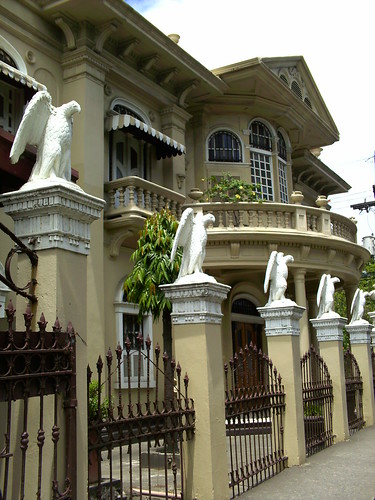
Though Neoclassic architecture is the predominant style that is being encompassed by this mansion, it is noticeable that the gate pillars are conquered by a demanding array of medieval inspired eagles instead of the usual urns or finials that are used as classical ornaments. Almost every part of the mansion is preserved very well that someone may never think that it has been there already for many decades.
Tuesday, March 11, 2008

The Gargantuan Cabatuan Church

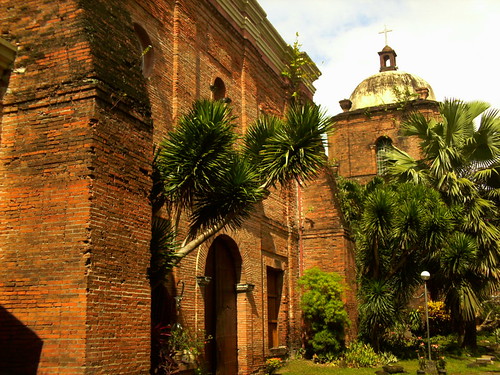
Many people would agree that the most beautiful colonial churches in the Philippines are found in the Visayas. Indeed, this cluster of islands in the heart of the Philippines is the haven of historical shrines of faith. Using red to brownish bricks as the only medium to create a magnificent temple, the Cabatuan church became the largest red brick structure in the Visayas after it was completely finished in 1866.
Cabatuan Church is so large that many tourist are awed by it's massiveness and would ask of why early villagers built a gargantuan church like it. Tall, Artistic and Massive, it is an epitome of grand temples just like those in Latin American Countries since it appeared like it was inspired by Peruvian Classical Architecture
The twin belfries are unique and compelling that no one will find any other bell tower just like them anywhere else in the country. The three facades of Neoclassic and Early Renaissance Architecture blends well with the baroque elements the burgeoned many parts of the temple.

Saturday, March 8, 2008

Hotel Del Rio

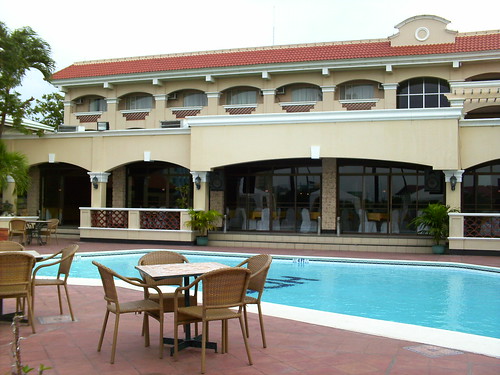
Situated along the Iloilo River, Hotel del Rio in Del Pilar Street, Molo is one of the premiere hotels there is in the city. Its most spectacular feature that no other hotel in Iloilo can offer is the view of the magnificent and tranquil Iloilo River. It is a recommended place for jam packed travelers who need a peaceful place to stay.If you are searching for great food, comfortable rooms, friendly and hospitable staffs, then Hotel del Rio is your stop. You don't need to travel far to find malls, schools, historic and touristy sites in the city. Hotel del Rio is so accessible to the public that you can reach your preferred destination in no time.

Sunday, March 2, 2008

Remembering Old Jaro

If Ilocos Sur has Vigan and Manila has Intramuros, here in Iloilo, we have Jaro. Many would agree that there is no other town in Iloilo that might surpass Jaro's colonial era atmosphere. Why? It is because that when you are in Jaro, you would notice that an 18th to an early 20th century building is standing beside another historical edifice or is a few meters away from a known heritage site. This means that almost every street has one or more historical site to be proud of and that when you are along the public square or commonly known as plazas, then, you might realize that almost everything in front of you is a gift of history. When you speak of the languages of architecture, you will surely be mesmerized of Jaro's varied classical 18th and 19th century Hispanio-Filipino houses as they mix along with the 20th century American inspired art deco buildings. Therefore, it is quite obvious that a walk within Jaro's old town area will surely fill your history notes and satisfy your camera films.

Saturday, February 23, 2008

The Magic of San Jose Church

If there is any tourist destination in Iloilo that never fails to satisfy me whenever I visit, it would be the Parish Church of San Jose in Plaza Libertad. The Church of San Jose is the queen of old Iloilo or the downtown city. It may not be as popular as the magnificent St. Anne Church in Molo or the miraculous St. Elizabeth of Hungary Cathedral in Jaro, but it is undoubtedly the most historical religious structure built in the entire city.
The beauty of San Jose Church looms unmindful of its time frame, it is as perfect as it has always been whether it is sunrise or sunset. It's artistic neoclassic facade with few details of greek, byzantine and tuscan architecture speaks of what a perfect Spanish Colonial Era structure is.According to history, the church was about to be bombed in the second world war when a false alarm was raised that Japanese soldiers were using the structure as a hideout. However, the alarm was proven wrong just before the church is to be destroyed. Miraculously, San Jose church is the only religious edifice in Iloilo that has survived the 1948 Earthquake calamity, which destroyed many of the beautiful Spanish and American Colonial structures in the Region

Tuesday, January 29, 2008

Historic Calle Real In Dinagyang Season

Have you ever imagined historic Calle Real without the hustling vehicles?
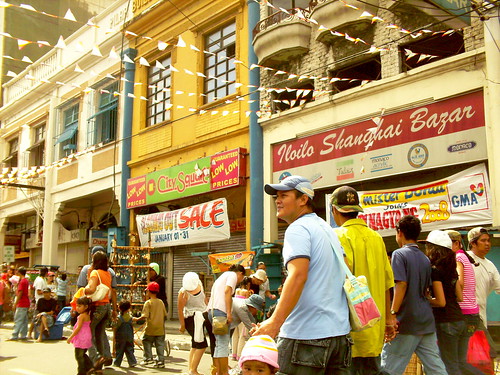
Iloilo's Heritage Street appeared like a touristy destination when foreign and local tourists flocked to witness the Dinagyang Street dancing competition. Traffic was closed and the main roads of downtown Iloilo was only opened to those who are willing to beat the heat and stroll around the city's historic corner.
Many of the buildings in Calle Real matched the festive mood of Dinagyang as colorful rays of banderitas showered the street with fun-filled colors. With a single look, a tourist may appreciate the beauty of Colonial architecture where Asian and European architectures are merged in one place. If further restorations will be push through, Calle Real may become one of Asia's Historic Business Centers just like the San Ma Lo in Macau.

Sunday, January 27, 2008

Dinagyang Festival: A Celebration of Life

January is considered as the Philippines' Festival Season. Three notable festivals from three cities showcase the extravagance of their lively cultures... The Sinulog of Cebu, the Ati-atihan of Aklan and the Dinagyang of Iloilo.
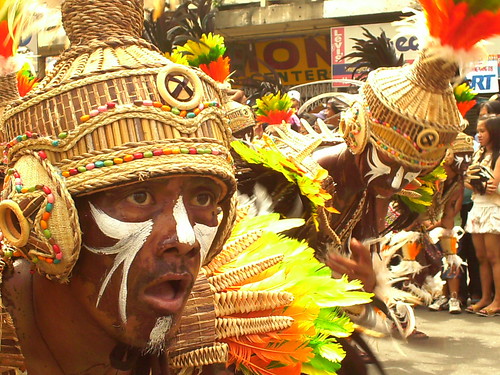
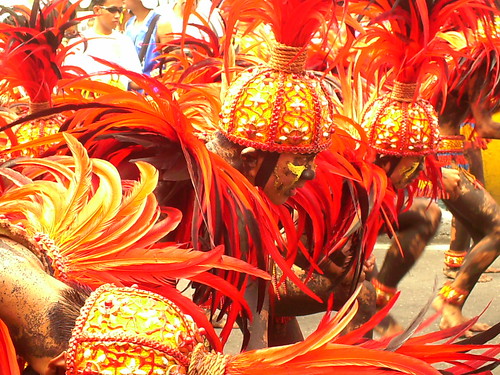
Dinagyang Festival, like Sinulog and Ati-atihan commemorates the Christianization of the natives. Dancing warriors in full regalia, accompanied by lively drums, shows how the native Filipinos glorify the child Jesus or the 'Santo NiƱo'. Noted as the 'Best Tourism Event in the Philippines' Dinagyang is an explosion of colors, reinvention of culture and an evolution of a tradition. It is a collection of different tribes competing in the 'Ati Contest', which is the very highlight of the Festival. Here, we don't see warriors battling but instead, we'll find them dancing. Their spears are not made to pierce and their shields are not armors but accouterments made to highlight buoyant colors and luridly spirited moves as the essences, of religion, tradition, culture and music are merged to create a calvacade of varied dances bursting with life.The festival is held at the fourth week of January in downtown Iloilo. Crowds, may they be local or foreign, enjoy a day filled with life, music and excitement as the yelling of "Hala Bira" which could possibly mean "move for more" or "Dance for More" souls up the entire event.