


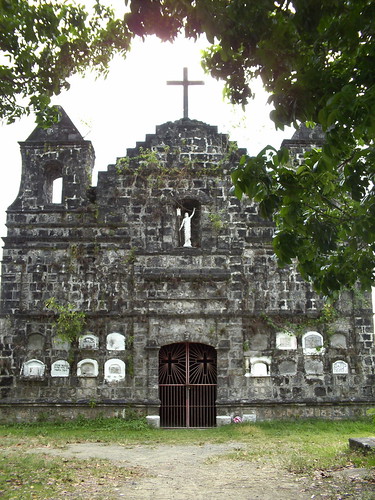
 Hamtik is a historical town in a neighboring province of Antique. Here lies the oldest Spanish Filipino Church in the entire Antique province. Built by Spanish conquistadores, the Hamtik Church was completed using dark gray stones with simple baroque designs. After the construction of newer church, the church ground was turned into a cemetery and the small stone church was turned into a cemetery chapel.
WELCOME to Iloilo, A Province that dances with the rhythm of the past and the promise of the future. HALA BIRA!!!

Friday, April 25, 2008
Hamtik Cemetery
Hamtik is a historical town in a neighboring province of Antique. Here lies the oldest Spanish Filipino Church in the entire Antique province. Built by Spanish conquistadores, the Hamtik Church was completed using dark gray stones with simple baroque designs. After the construction of newer church, the church ground was turned into a cemetery and the small stone church was turned into a cemetery chapel.

Wednesday, April 9, 2008
Molo Church: Grand and Gothic
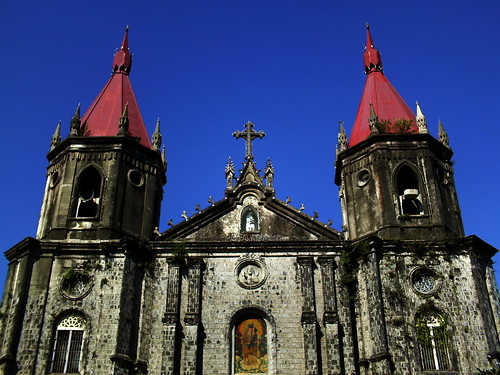 The magnificent towers, the dark gray coral stonewalls, and the grand battle between the elements of Romanesque and Gothic features all contribute to make Molo Church appear as if it was built in the time of Kings and Queens. The church is built by combining Gothic with Classic art dominantly proven by the complimenting effect of the Romanesque central dome and the Gothic twin towers. The Corinthian columns which flank the aisle to the altar each hoist a female saint, a unique aspect that makes the whole edifice not like the usual.
Mistaken as a castle by many tourists, Molo Church is considered the tallest Historical structure in all of Panay Island. It is known by many as the women's church and a photographer's favorite.
Once inside, everyone can feel the essence of solemnity by looking at the biblically inspired masterpieces painted on the walls, wooden artworks like the artistic pulpits, niches and the five grand retablos that highlight the whole beauty of the interior, no wonder Dr. Jose Rizal called it a 'pretty' church.
Saturday, April 5, 2008
Leganes Church: The Mecca of Iloilo
 Iloilo is a known religious province and the number of pilgrim sites scattered all over the land testify the Ilonggo's strong faith and devotion to God. Amongst these shrines of faith, the church of San Vincente Ferrer in the town of Leganes is perhaps the most visited because people from all over the country would come to pay homage and display their acts of faith with hopes that the desires of their hearts might be fulfilled.
Declared as a diocesan shrine, the imposing baroque structure stands facing the town plaza as it struck passersby with its captivating beauty. The facade is an elaborate example of the usual baroque church common in the Philippines and in other countries around Europe. Without the canopy, the facade would have shared a lot similarities with the Church of Saint Theresa in Lithuania. Though it was just recently rebuilt, the architects and engineers did choose the best details that could make an astonishing facade that depitcs nothing else but elegance, faith and magnificence.
Friday, March 14, 2008
The Celso Ledesma Mansion
 Located in Ortiz St., downtown Iloilo, the Celso Ledesma Ancestral Mansion is one of the most beautiful heritage houses with a preserved elegance that is very appealing to a traveler's eye. It is a Neoclassic structure common in the early 20th century during the border of the late Spanish Colonization and Early American Occupation.
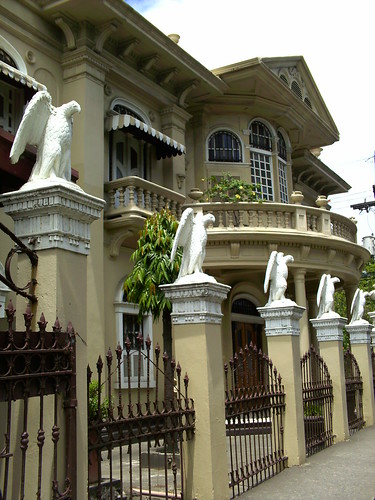 Though Neoclassic architecture is the predominant style that is being encompassed by this mansion, it is noticeable that the gate pillars are conquered by a demanding array of medieval inspired eagles instead of the usual urns or finials that are used as classical ornaments. Almost every part of the mansion is preserved very well that someone may never think that it has been there already for many decades.
Tuesday, March 11, 2008
The Gargantuan Cabatuan Church
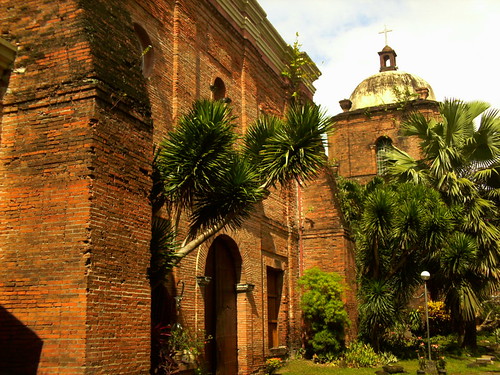 Many people would agree that the most beautiful colonial churches in the Philippines are found in the Visayas. Indeed, this cluster of islands in the heart of the Philippines is the haven of historical shrines of faith. Using red to brownish bricks as the only medium to create a magnificent temple, the Cabatuan church became the largest red brick structure in the Visayas after it was completely finished in 1866.
Cabatuan Church is so large that many tourist are awed by it's massiveness and would ask of why early villagers built a gargantuan church like it. Tall, Artistic and Massive, it is an epitome of grand temples just like those in Latin American Countries since it appeared like it was inspired by Peruvian Classical Architecture
The twin belfries are unique and compelling that no one will find any other bell tower just like them anywhere else in the country. The three facades of Neoclassic and Early Renaissance Architecture blends well with the baroque elements the burgeoned many parts of the temple.
The twin belfries are unique and compelling that no one will find any other bell tower just like them anywhere else in the country. The three facades of Neoclassic and Early Renaissance Architecture blends well with the baroque elements the burgeoned many parts of the temple.
Saturday, March 8, 2008
Hotel Del Rio
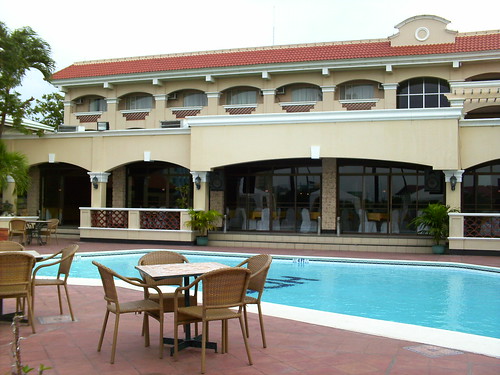 Situated along the Iloilo River, Hotel del Rio in Del Pilar Street, Molo is one of the premiere hotels there is in the city. Its most spectacular feature that no other hotel in Iloilo can offer is the view of the magnificent and tranquil Iloilo River. It is a recommended place for jam packed travelers who need a peaceful place to stay.If you are searching for great food, comfortable rooms, friendly and hospitable staffs, then Hotel del Rio is your stop. You don't need to travel far to find malls, schools, historic and touristy sites in the city. Hotel del Rio is so accessible to the public that you can reach your preferred destination in no time.
Sunday, March 2, 2008
Remembering Old Jaro
 If Ilocos Sur has Vigan and Manila has Intramuros, here in Iloilo, we have Jaro. Many would agree that there is no other town in Iloilo that might surpass Jaro's colonial era atmosphere. Why? It is because that when you are in Jaro, you would notice that an 18th to an early 20th century building is standing beside another historical edifice or is a few meters away from a known heritage site. This means that almost every street has one or more historical site to be proud of and that when you are along the public square or commonly known as plazas, then, you might realize that almost everything in front of you is a gift of history. When you speak of the languages of architecture, you will surely be mesmerized of Jaro's varied classical 18th and 19th century Hispanio-Filipino houses as they mix along with the 20th century American inspired art deco buildings. Therefore, it is quite obvious that a walk within Jaro's old town area will surely fill your history notes and satisfy your camera films.
Subscribe to:
Posts (Atom)

