Let's Travel and Discover the Secrets of ILOILO

WELCOME to Iloilo, A Province that dances with the rhythm of the past and the promise of the future. HALA BIRA!!!

Tuesday, April 28, 2009

The Andoks Mansion

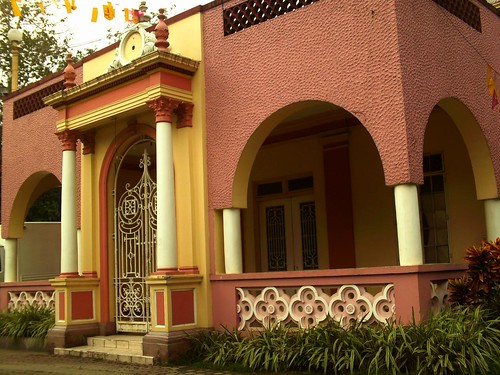
An old Mansion turned into a restuarant, well that's not a first but I guess you'd still love the thought that your dining in one of most historical places in the city. Andoks is a popular Chicken Fastfood Restaurant which was established a few years ago. One of it's first branches in Iloilo City was at Jaro when the old orange mansion in front of the public park was turned into a restaurant which everyone knew as 'Ihaw-ihaw republic'. 'Ihaw-ihaw' is another way of roasting meat and is also known as 'inasal' that is a popular delicacy in the cities of Iloilo and Bacolod. 

The Old mansion is mexican inspired perhaps because of it's festive colors and overwhelming arched details. The mansion is known for its lovely intricate portal which is neoclassic and the rest of the house is detailed using the styles of Art Deco.

If you're simply looking for place to nibble on some good food, or simply give your feet some rest or refresh yourself with coolers then try visiting Andoks, a dining center that is tinged with a spice of history.

Sunday, April 19, 2009

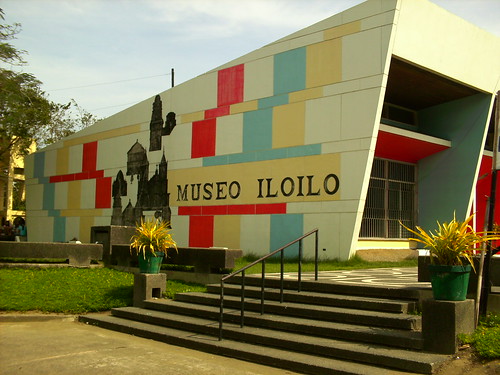
Museo Iloilo: Where History Comes Alive

'Museo Iloilo' is the provincial Museum of Iloilo. It is located near the Provincial Capitol and is one of the most visited tourist destinations in the province since it is located strategically near important government and liesure centres in the city. The Museum hosts many of the province's historical treasures like potteries found even before in the Spaniards arrived in the island of Panay and so as religious artifact of the Hispanio-Filipino Era. The Museum also displays a variety of Ilonggo paintings and sculptures both modern and antique. Weaponries and armories of the Filipino-Spanish War in the late 1800th century and some artificats from the second world war are interesting finds as well.

There is also a mini-library and photo gallery where you can learn many things about the province through eductaional books and rare pre-war photographs that showcases the colonial beauty of prewar Iloilo and the simple life of the Ilonggos before modernization arrived in the islands.

If you want to learn many things about Iloilo like how life was during the colonial Era and how Iloilo took hold of it's victory from its invaders or simply see notable ilonggo artistry, then I suggest you to visit Museo Iloilo, a place where the History of the province is brought back to life.

Friday, April 10, 2009

Baluarte Hill: A place teeming with Hope

As Filipino tradition, Roman Catholics would go to pilgrim sites such as local calvary hills and sacred mountains every Good Friday to pray, ask forgiveness and give thanks to God.  In Iloilo alone there are about more than five pilgrim hills to visit. I went to Baluarte Cross located in one of the hills of Balic in the town of Cabatuan. The Baluarte Cross was established many decades ago as a replica to the more Historical Pamul-ogan hill, also in the same town, that is about three hundred years old.

Every Good Friday, hundreds and possibly almost a thousand people would come to Cabatuan and visit the Cross at Baluarte hill. The Faith of these pilgrims would fill the air with solemnity as those who are asking of a miracle would come to the cross at the peak of the hill and pray to God. 

If it is not Lent Season, some people would just gather to have good picnic at the top of hill, some would simply enjoy the magnificent scenery of the fields, mountains and of the nearby hills as the very shade of trees and the cool breeze refreshes the soul. Baluarte Hill is one of the most interesting places in the province of Iloilo. It is a Religious Tourist Site that is worth visiting for it was indeed built by the people's Faith and Devotion to God, a sign that Jesus Christ towers all over the world and so as in our hearts.

Saturday, April 4, 2009

Campo Santo de San Joaquin

I have been there for so many times but I still get caught in awe whenever I would step into the magnificent walls of the San Joaquin Cemetery. Known as the most beautiful Spanish colonial cemetery in Iloilo and in the Philippines, the cemetery is popular for its very intricate chapel which is described to be like a crown sitting on top of a hill at the very center. 

The chapel which is of Baroque architecture that combines Chinese and Spanish Artistry is built of white coral and fossil stones alternating with red bricks. Decorations vary from intricate floral carvings to pointed finials to a simple cemetery emblem, the skull and crossbones. What makes the cemetery more attractive is that the beautiful chapel is approached by a flight of stairs. On the walls before the chapel are niches each carrying statues of Saints, most of which were recently reinstalled.

The San Joaquin Cemetery, along with the San Joaquin Church is known as one of Iloilo's Most important tourist attractions since it plays a great role in literature and history. The Province even cosiders these heritage sites as Historical Gems.

Saturday, February 21, 2009

Iloilo: 'A Visita Iglesia'


Visita Iglesia is a known Roman Catholic tradition where Christians would visit seven churches to pray as part of their pilgrimage for the lent season or 'Semana Santa'. This custom was passed to the Filipinos by the Spaniards who brought Christianity in the Philippine Islands and has been practiced for many centuries as part of the religion's faithful devotion to God. 

When in the city, one may adore the beautiful spires of Molo Church which is also known as the church of women because of the domination of female saints inside the church. The Cathedral of Jaro and the Church of San Jose are also interesting points to spend solemn moments with the Divine Being. Off the city, a traveler may find the Magnificent Sta. Barbara Church and Convent, known for it's moorish architecture possibly inspired by churches of Southern Spain. The road north leads to the massive Cabatuan Church that is the largest red brick structures in the entire country and also considered as one of the greatest architectural acheivements of its era. One may also take the road west where three beautiful baroque churches await travelers; there's the beautifully decorated Guimbal Church with its flowery designs, the famous Miagao Church, a world heritage site and known fort its unique Aztec-like design and finally, the San Joaquin Church, which is also known as the gem of the island for it's unique bas-relief facade depicting the victory of the Christians in Morocco.

There are actually more than twenty beautiful churches to visit in Iloilo. Wherever you are in the province, there is one historical temple nearby. However, it is not important if you visit many churches, what matters most is that you know and you feel that God is in your heart that is the very temple of faith within you.  Happy Lent Season everyone.


Monday, February 9, 2009

Dingle Church: Another Historical Treasure

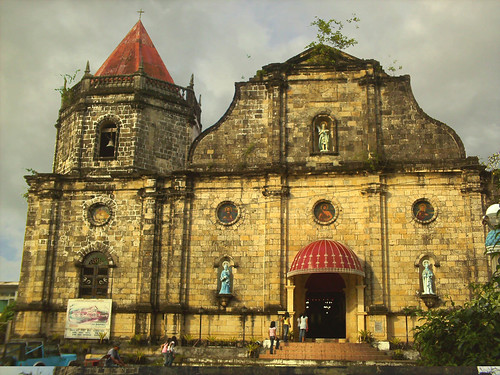
If there is any historical tourist site in the province of Iloilo that would stand out with simplicity and with a soft country feel then it would be the humble stone church of Saint John the Baptist in the peaceful town of Dingle. Built in the late 1800's the church is considered as one of the most remarkable structures there is in Iloilo. The presence of a single belfry adds a sense of uniqueness to the whole structure and though the facade suggests simplicity, the interior however speaks of Neoclassic extravagance.

Built in Earthquake Baroque architecture, the gold-like walls of the church stand out as well as it's distinct style. The church will remind us of pilgrim chapels in the Europe and Latin America where not much architectural details are used and there is not much emphasis on size which further appeals to a peaceful and serene atmosphere. Though the church was not built to outshine other neighboring temples, its simplicity always carries a certain charm that makes it a beautiful site to behold.

Sunday, January 25, 2009

Iloilo DINAGYANG 2009

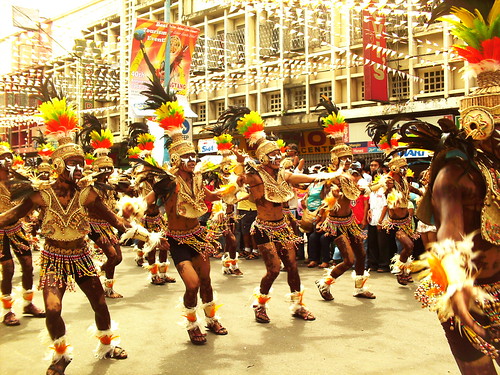
Energy soars as the thundering roars of drums and cheers of 'Hala Biras' filled the street of Iloilo... It's Dinagyang.... The Best Tourism Event there is in the Philippines...

Dinagyang is considered as Iloilo's most prominent tourist magnet. Aside from the province's Centuries old Historic Churches, local delicacies, ancestral buildings and friendly people, Iloilo is also known to be one of the Philippines' festival Countries. Iloilo's Dinagyang, Like Cebu's Sinulog and Kalibo's Ati-atihan is a showcase of the unique mixture of the Iloilo's Hispanic and Native Culture. Stories of the past and of how the city became dedicated to Christianity is expressed by dances and ancient music of drums and lyres. Each warrior-dancers stomp their feet and cheer "Viva Senior Santo Nino" that means Long Live the Child Jesus and "Hala Bira" meaning Keep it going or Come On.

And who made it big this year?

Champion: Tribu Paghidaet of La Paz National high School
1st: Tribu Bola-Bola of Iloilo National High School
2nd: Tribu Ilonganon of Jlandoni National High School
3rd: Tribu Silak of Molo National High School
4th: Tribu Himal-us from the province of Guimaras

The streets of Iloilo were filled with a great number of spectators both local and foreign. Aside from the Festival itself, many activities await guests and tourists... the city teems with life and vibrant colors. So If you missed Dinagyang this year...There will always be next year... And expect that Dinagyang well be even much better than how it has been the year before so you should totally come back again and again and again as if it was first time. 

Happy Dinagyang Season!!!